Recovery after bypass surgery changes from assisted movement in hospital to monitored exercise and, later, independent conditioning. You will learn what happens at each stage, how a rehabilitation team decides whether exercise is safe, which symptoms need urgent attention, and how to choose between centre-based, home-based and other follow-up options.
Key takeaways
- Progress from short walks to conditioning as your surgeon clears each stage.
- Protect the healing sternum by avoiding heavy lifting and forceful pushing or pulling.
- Stop exercising and seek medical help for chest pain, fainting, or severe breathlessness.
- Choose supervised rehabilitation when medicines, symptoms, or exercise safety are difficult to manage alone.
What recovery looks like from hospital discharge to long-term conditioning
Recovery after bypass surgery follows staged progress, not a fixed calendar. The post bypass recovery stages begin with safe movement in hospital, continue through the hospital-to-home transition, and end with long-term conditioning and cardiovascular risk control.
- In hospital, nurses and physiotherapists guide sitting up, transfers, breathing exercises, self-care and early walking after CABG. They watch symptoms, blood pressure, heart rhythm and wound condition before increasing activity.
- Before discharge, the team confirms medicines, follow-up appointments, activity limits and warning signs. A cardiac rehabilitation referral should begin here, but complications such as infection, arrhythmia or heart failure can change the timetable.
- At home and in outpatient rehabilitation, wound recovery after heart surgery continues alongside gradually longer walks, structured aerobic exercise and later resistance work. Staff adjust intensity to your symptoms, functional capacity, sternum healing and other illnesses.
- During longer-term conditioning, rehabilitation adds nutrition, weight management, smoking cessation, medication review and support for anxiety, low mood, sleep disruption or fear of exertion. The aim is a routine you can maintain safely, not a short burst of exercise.
Do not wait for the next session if you develop new or worsening chest pain, severe breathlessness, fainting, sustained palpitations, fever, wound redness or discharge, marked swelling, or sudden deterioration. Contact your surgical or medical team urgently, and never stop aspirin, beta blockers, statins or anticoagulants without clinical advice.
What happens during a supervised post-bypass rehabilitation session
Before exercise begins, staff use a cardiac rehabilitation assessment to decide what you can safely do that day. They do not assign every patient the same treadmill speed or distance. A post bypass rehabilitation session starts with an intake review, resting measurements and a check for changes since your last visit.
The assessment may include:
- Chest discomfort, breathlessness, dizziness, fatigue or new palpitations
- Resting blood pressure, heart rate and oxygen saturation
- Current medicines, including recent dose changes
- Walking ability, balance, mobility and surgical recovery
- Functional capacity and confidence with activity
- An exercise test or rhythm monitoring when clinically indicated
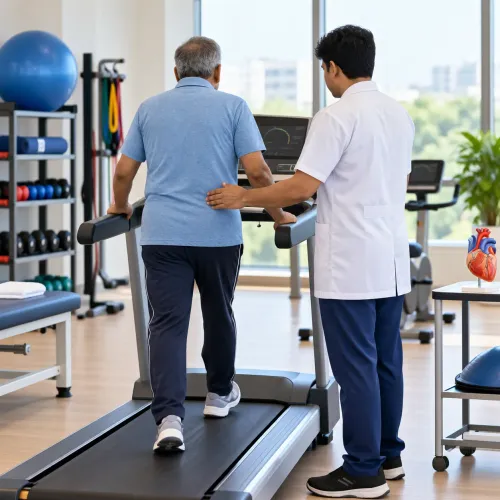
Staff then choose an aerobic activity such as walking or cycling, with resistance work added when your healing and strength allow. You begin with a warm-up at low effort. During exertion, heart rate monitoring, blood pressure checks, symptoms, breathing and perceived exertion guide any increase or reduction in workload.
You should not be told to “push through” pain. Unexplained chest discomfort, marked breathlessness, dizziness, fainting or an abnormal rhythm means stopping for medical assessment. The session ends with a gradual cool-down rather than an abrupt stop, followed by repeat observations and a review of how you responded.
Staff record the result so the next session reflects your recovery, medicines and current tolerance—not a generic target.
How to move safely while the sternum heals—and recognise danger signs
Short, frequent walks are expected early after discharge; increase distance before speed and pause when you feel tired. Mild postoperative fatigue and breathlessness can follow surgery, but both should gradually improve rather than intensify. Use the talk test: slow down if you cannot speak a full sentence comfortably.
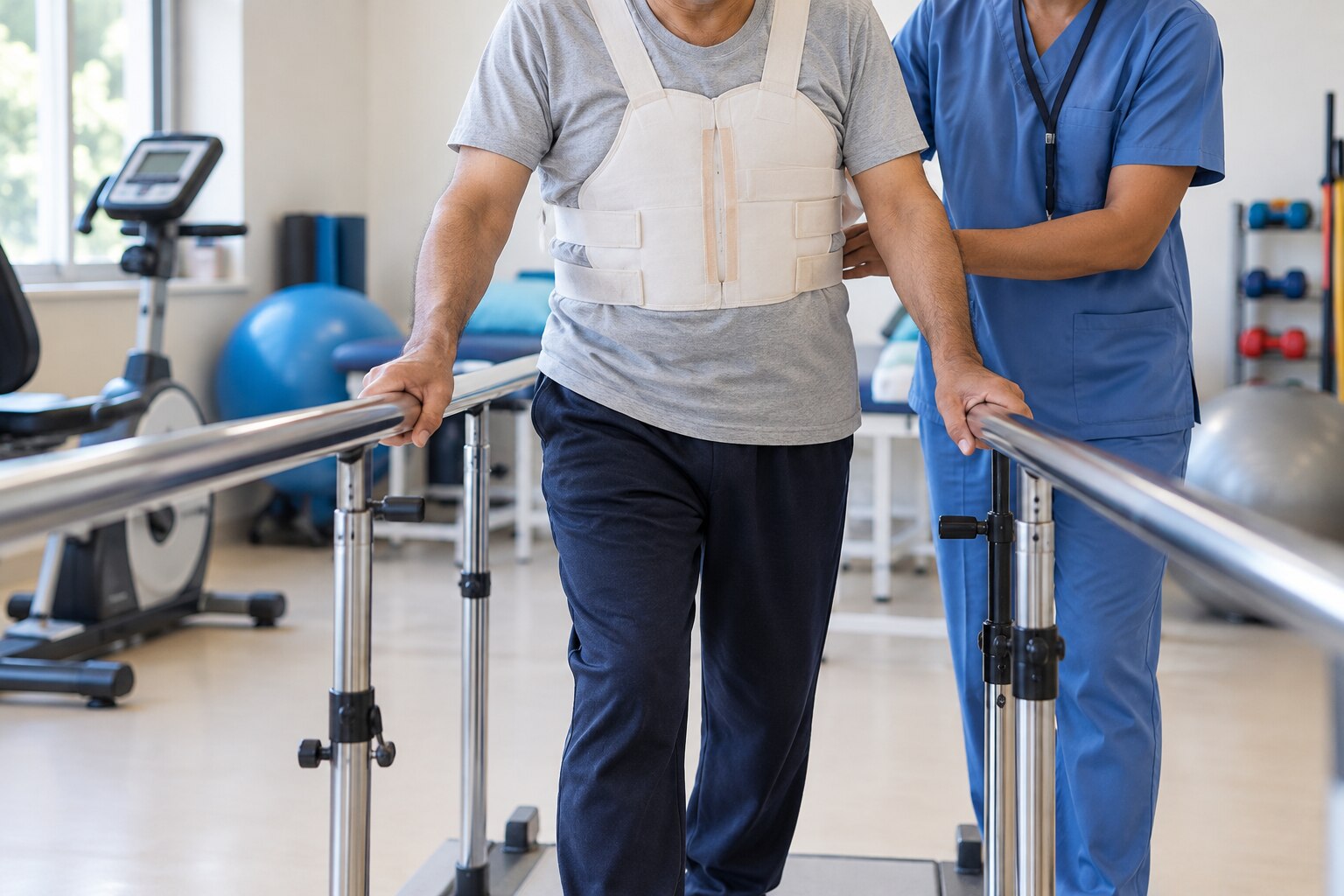
Sternotomy precautions protect the healing breastbone. Avoid pushing up from a chair, forceful pulling, heavy overhead work and uneven-surface activities that could cause a fall. Lifting after bypass surgery should follow your surgeon’s specific limit; do not carry heavy bags or lift weights until the sternum is stable and your rehabilitation team advances resistance exercise.
Ask your surgeon before driving after CABG, because braking, steering and a possible collision load the chest.
| Symptom or movement | What may be expected | Stop exercise or seek help |
|---|---|---|
| Mild incision soreness, stiffness or tiredness | Improves with rest and does not worsen during walking | Stop if pain increases or limits movement |
| Mild breathlessness that settles within minutes | Occurs at a steady, comfortable effort | Stop for marked or increasing breathlessness, dizziness or unusual weakness |
| Brief awareness of heartbeat | Settles quickly without other symptoms | Stop for sustained palpitations, an irregular rhythm or faintness |
| Wound tenderness without spreading redness | Incision remains closed and dry | Contact the surgical team for fever, spreading redness, discharge or marked swelling |
| No symptoms at rest | Recovery is stable | Seek urgent medical help for new chest pressure, fainting, blue lips or sudden deterioration; do not wait for rehabilitation. |
How the programme changes for your heart, lungs, medicines and daily risks
Reduced ejection fraction changes the starting line: exercise begins at an intensity that matches pumping capacity, symptoms and rhythm findings, not a standard treadmill prescription. The team progresses time or resistance only after blood pressure, oxygen levels and recovery remain stable.
The assessment then adjusts for:
- Reduced ejection fraction: use shorter intervals, lower resistance and closer rhythm monitoring.
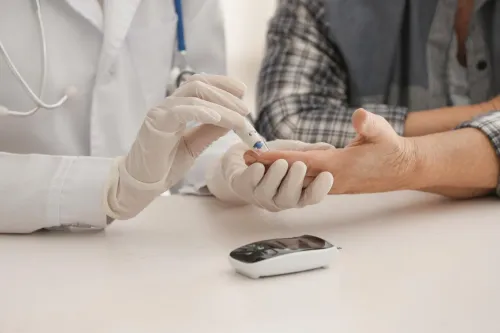
- Diabetes: cardiac rehabilitation coordinates exercise with meals, glucose checks and treatment to reduce hypoglycaemia risk.
- Kidney disease: review fluid balance, blood pressure and fatigue before increasing workload.
- Lung disease after heart surgery: check breathing, oxygen saturation and recovery from breathlessness.
- Surgical complications: postpone or modify training for wound infection, atrial fibrillation, fluid retention or other new findings.
Medication review continues after discharge because dose changes can alter exercise tolerance and dizziness; never adjust treatment yourself. A beta blocker, for example, can keep your pulse from rising normally, so perceived exertion and symptoms matter alongside heart rate.
Psychological recovery is part of cardiac care. Screening for fear of exertion, anxiety or low mood can lead to counselling and practical support for sleep, work or returning to normal routines. If new symptoms, marked fatigue or emotional distress reduces participation, tell the rehabilitation team rather than pushing through or stopping without guidance.
When centre-based rehabilitation is preferable to home walking or a gym
Choose centre-based cardiac rehabilitation when your exercise plan needs medical adjustment, monitoring or rapid clinical review—not simply motivation to walk. It is particularly useful after complications, limited mobility, breathlessness, rhythm problems, heart failure or several medicines.
| Option | What you receive | When it fits |
|---|---|---|
| Centre-based cardiac rehabilitation | Risk assessment, medication review, monitored aerobic and resistance training, education, nutrition and psychological screening | Higher-risk recovery, uncertain exercise tolerance, symptoms during activity, or difficulty judging safe intensity |
| Home-based cardiac rehabilitation | A prescribed walking and strengthening plan with scheduled remote or in-person review | Stable patients who can monitor symptoms, follow instructions and lack practical access to a centre |
| Hospital follow-up after CABG | Wound, graft-recovery, medicines and complications reviewed by the surgical or cardiology team | Essential medical review; it does not replace repeated exercise supervision |
| Physiotherapy alone | Targeted breathing work, mobility, posture, strength or functional rehabilitation | Physical limitations needing therapy, but not a complete cardiovascular risk-management programme |
| General gym | Equipment and independent training without CABG-specific clinical oversight | Later maintenance after clearance, not the safest starting point for unexplained symptoms or low exercise tolerance |
Home-based cardiac rehabilitation is a valid alternative for a stable, reliable patient, and a hybrid plan can combine home walking with periodic supervised checks. A gym becomes more suitable after your team confirms intensity, lifting limits and warning symptoms.
For post bypass rehabilitation in Pune, ask HealNext Clinic Baner, Pune whether the intake covers resting measurements, medication changes, rhythm concerns and functional capacity rather than assigning everyone the same treadmill routine. Any new chest pain, fainting or severe breathlessness belongs with your medical team, not the next class.
Related service
Post-CABG (Bypass Surgery) Rehabilitation Post-CABG (Bypass Surgery) Rehabilitation in Baner, Pune Recovery after Coronary Artery Bypass Grafting (CABG) is a critical phase where the heart and lungs need guided care to regain strength. View service → |
Frequently asked questions
What are the stages of recovery after bypass surgery?
Recovery progresses from safe movement in hospital to supported activity at home, followed by long-term conditioning and cardiovascular risk control.
What happens during a supervised post-bypass rehabilitation session?
A supervised session reviews symptoms and vital signs, guides suitable exercise, and adjusts activity as your heart, lungs, medicines, and fitness change.
How can you move safely while the sternum heals?
Follow your surgical team’s lifting and movement limits, increase walking gradually, and stop for chest pain, fainting, severe breathlessness, or other danger signs.
When is centre-based rehabilitation better than home walking or a gym?
Choose centre-based rehabilitation when you need monitored exercise, help managing symptoms or medicines, or guidance for returning safely to daily activities.